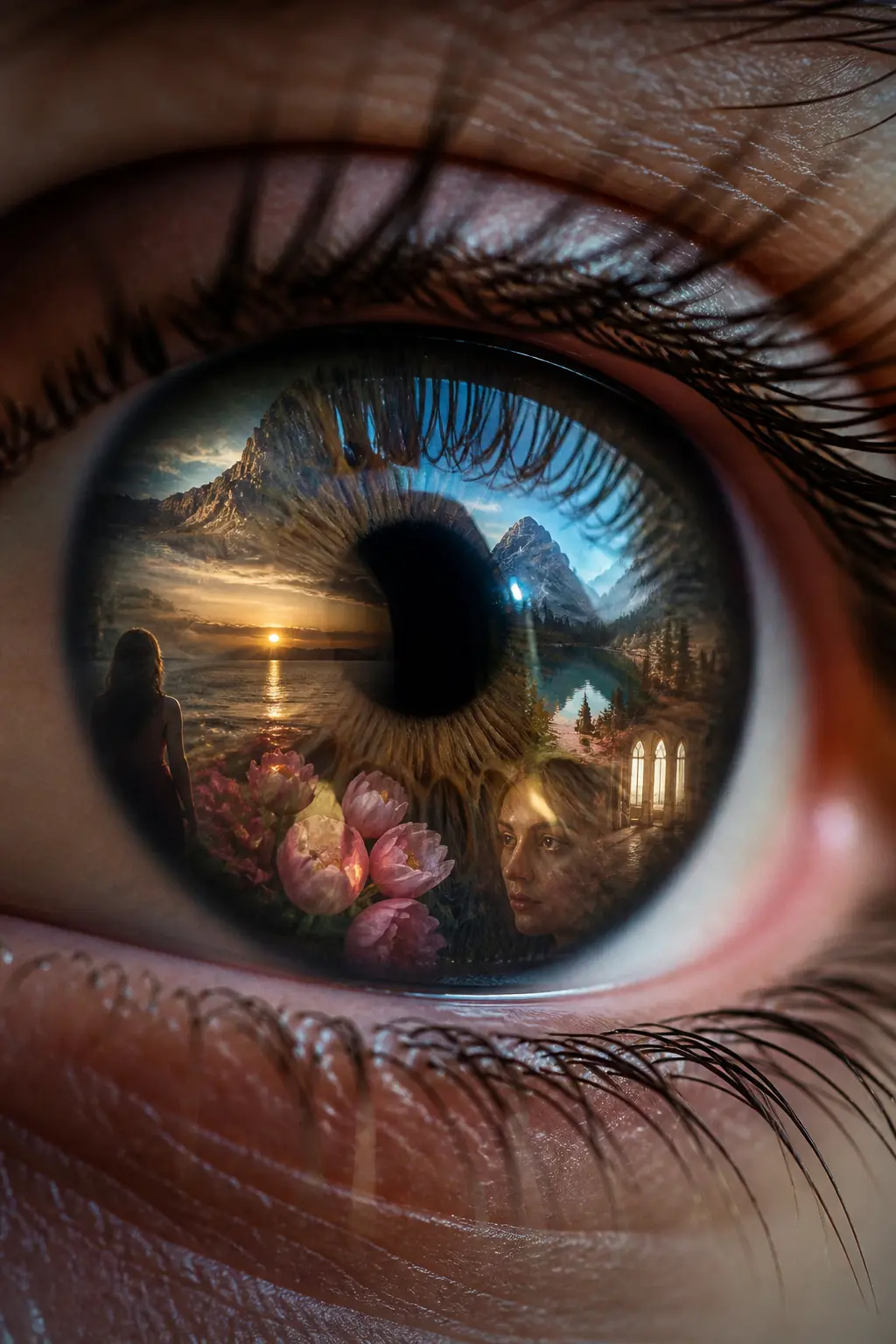
Personal style may be less something we invent and more something we gradually recognize through recurring attraction.
We often speak about personal style as though it were something we consciously construct.
We choose the jacket. We select the furniture. We decide on the color of the automobile. We choose the artwork, the shoes, the watch, the lighting, the flooring, the fabric, the objects that eventually occupy the spaces around us.
Put enough of those decisions together and we call the result our style.
But what if the process begins much earlier?
What if, before we ever consciously decide what our style is, we have already spent years quietly collecting it?
Think about the experience of shopping when you are not really looking for anything.
You walk through a store. You scroll through a website. You flip through images without a particular purchase in mind. Hundreds of objects appear in front of you, yet one suddenly causes you to stop.
Something about it feels right.
Maybe it is the color.
Maybe the shape.
Perhaps it is a texture, a silhouette, a material, a particular combination of colors—or simply a mood you cannot immediately explain.
You may not need it. You may have absolutely nowhere to put it.
You might not even buy it.
That isn’t really the important part.
The more interesting question is:
Why did that particular thing get your attention?
01
The Memory Bank
I have begun to wonder whether we carry around something resembling a visual memory bank.
Throughout our lives, we encounter thousands upon thousands of visual impressions. Childhood homes. Clothing. Cars. Album covers. Movies. Restaurants. Hotel lobbies. Architecture. Landscapes. Furniture. Art. Neighborhoods. People. Fashion. Interiors. Nature.
Most of those images seemingly disappear.
But perhaps some do not.
Certain colors, forms, textures and combinations may leave traces behind because, for whatever reason, they attracted us.
Then something interesting happens.
Years later, we encounter an object we have never seen before, yet our reaction to it can feel strangely familiar.
We are drawn toward it.
Why?
Perhaps that object contains something our visual memory already recognizes.
And repeated often enough, those attractions may begin revealing what I think of as a style aura.
A style aura isn’t simply whether your taste is modern, traditional, minimalist, maximalist, bohemian or contemporary.
It is more personal than a category.
It is the recurring visual language connecting the things that attract you.
02
Try the Experiment
The next time you are browsing—particularly when you aren’t deliberately searching for something—pay attention to what makes you stop.
Don’t immediately ask:
Where would I put this?
What could I wear this with?
Does this match my sofa?
Would this work with the shoes I already own?
Instead, notice the attraction before you start solving the practical problem.
And I am certainly not telling you to make the purchase.
The attraction itself is the experiment.
But if you do eventually buy the object, wait until it becomes part of your everyday surroundings.
Then look again.
Does it coordinate with something you already own?
Perhaps the connection isn’t obvious.
Maybe the jacket has the same understated geometry as your favorite chair.
Perhaps the blue of the automobile you selected bears a surprising relationship to colors appearing throughout your home.
Maybe a piece of art you could not stop thinking about contains the same earthy tones that repeatedly find their way into your wardrobe.
They don’t necessarily match.
But somehow, they speak the same language.
That may be your style aura revealing itself.
03
The Aesthetic Soup
Then comes the bigger question:
Where did all of this come from?
I imagine the answer is complicated.
Childhood must contribute something.
So must travel.
Architecture.
Nature.
Movies.
Music.
Fashion.
The homes we visited.
The neighborhoods we walked through.
Things our parents owned.
Objects we admired but could not afford.
Places we visited once and somehow never forgot.
Perhaps even colors we have learned to associate with particular emotions—or colors that seem capable of producing an emotional response before we consciously understand why.
Put all of that together and perhaps we get something resembling an aesthetic soup.
Some ingredients are obvious.
Others have been simmering so long that we may no longer remember when they entered the pot.
When I look at my own style aura, I can identify some of those ingredients.
My early childhood environment is certainly there.
So are the scenes and music I was exposed to.
Growing up around an artistic family undoubtedly added something as well.
Those environments didn’t hand me a manual and say, this will become your style.
They simply surrounded me.
And perhaps that’s the point.
We absorb before we articulate.
04
And Then There Is Genetics
There is another question I find interesting—and I don’t pretend to know the answer.
What about genetics?
Can aesthetic attraction contain some inherited component?
Could certain tendencies toward color, form, symmetry or visual stimulation be influenced by biology?
Or is what we call inherited taste actually the result of growing up around people whose preferences, environments and creative habits become our earliest visual education?
Nature?
Nurture?
Probably another ingredient for the soup.
For now, I am less interested in proving the origin than I am in noticing the pattern.
Because once you start noticing it, something changes.
You may begin looking around your own environment and seeing connections you never intentionally created.
A wardrobe.
A room.
A vehicle.
Artwork.
A collection of objects.
Individually, they may have been selected years apart for completely different reasons.
Collectively, they may reveal you.
05
Style Versus Trend
This is also where personal style separates itself from trend.
A trend tells us what is attracting everyone else’s attention at a particular moment.
Personal style reveals what continues attracting ours.
Trends can influence the memory bank, certainly. We don’t live outside culture.
But the things that remain compelling after a trend disappears may tell us much more about ourselves.
Perhaps that is why some objects remain favorites for decades while others quickly begin to feel dated.
One belonged to a moment.
The other belonged to us.
And there may be something freeing about recognizing that distinction.
Personal style doesn’t necessarily require constantly reinventing yourself.
You may not need to discover an entirely new aesthetic every season.
Instead, perhaps the more interesting exercise is learning to recognize the thread already running through the things you love.
Look at what repeatedly stops you.
Look at the colors that keep returning.
Notice the shapes.
The textures.
The proportions.
The moods.
Look beyond fashion.
Look at your home.
Your automobile.
The destinations that attract you.
The architecture you photograph.
The artwork you remember.
Even the things you admired but never purchased.
There may be a pattern hiding in plain sight.
And if there is, perhaps personal style is not simply something we manufacture through careful decisions.
Perhaps it has been quietly assembling itself through memory, attraction and experience all along.