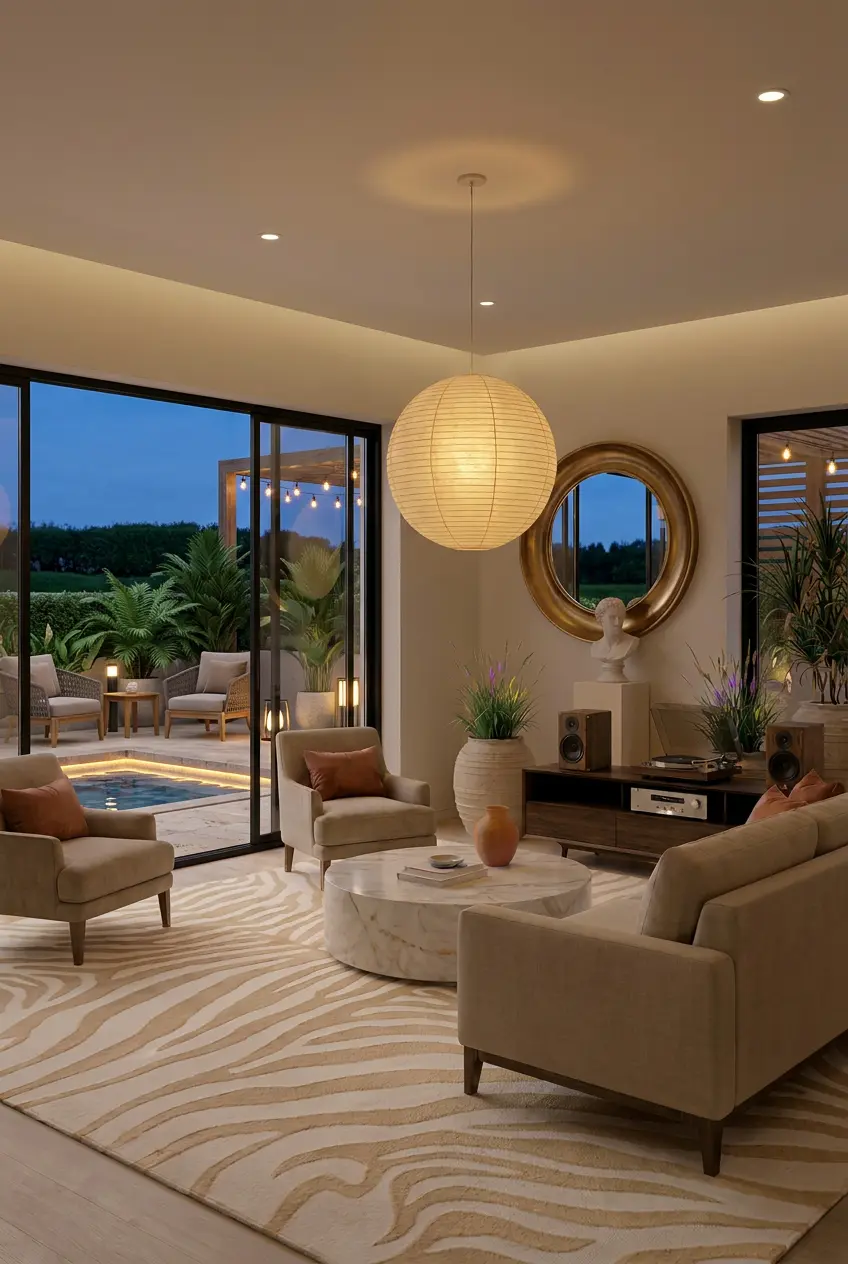
The beauty of Caribbean ownership may attract the eye, but the complete investment story begins beyond the view.
01
Before the Property, There Was Trust
Several years ago, two of my closest friends—both old college mates—told me they were purchasing an investment property in the Dominican Republic. Naturally, my eyes widened with curiosity. The idea struck me as intriguing, attractive and remarkably smart. I wanted to know more.
I asked question after question. They answered everything they could, and when they did not have an immediate answer, I conducted my own research. In many cases, they later followed up with additional information. Yet the most important question for me was not where they were buying, why they had chosen the Dominican Republic or even what type of property they were purchasing.
My most important question was: Who were their connections?
Making any foreign investment carries risk—or, at the very least, creates a powerful feeling of risk. That uncertainty becomes even more pronounced when it is your first venture outside the United States. You are not only evaluating a property. You are trying to understand an unfamiliar market, a different purchasing process and a network of people you may never have worked with before.
One of the few things capable of easing that feeling is trust.
As time passed, I watched my friends’ property move through development. Plans became tangible. Construction progressed, and those visible signs made the entire idea feel less theoretical. My enthusiasm grew. Their shared vision and confidence made the possibility of following a similar path feel more attainable.
02
Enthusiasm Meets Caution
I still had one important person to convince: my wife.
She is not as comfortable with risk as I am. Although she has always supported my ventures, the idea of purchasing foreign real estate initially produced a mixture of shock and apprehension. Her reaction was understandable. From a distance, the idea could easily sound like an enormous leap into the unknown.
Once she was fully on board, however, I started my engine. Together, we researched properties we believed we could afford and discussed the types of homes that interested both of us. We created a list and gradually reduced it until only the strongest possibilities remained.
I contacted the realtor who had assisted my friends. She carefully walked us through each property’s details, advantages and disadvantages: the surrounding area, possible rental appeal and considerations that were not always obvious from a listing or photograph. With every conversation, my excitement increased and my sense of risk decreased.
We also discussed the Dominican purchasing process and the importance of appropriate legal representation. Through my friends’ experience, I had already learned how important that legal guidance could be. I cannot remember exactly how long it took us to thread the needle toward a purchase. I only remember that it felt long. When I become enthusiastic about something, I want everything placed on fast-forward. I have learned that this is not always one of my better qualities—especially when patience and careful judgment are required.
03
When the Search Changed Hands
Nearly a year passed. During that time, the realtor I had been working with relocated to another part of the island. She remained helpful, but I eventually needed another real-estate company to help complete the venture. Naturally, that familiar feeling of risk returned.
At the same time, I discovered just how crowded the market had become. New developments seemed to be appearing everywhere, while real-estate companies and independent agents competed for new business. It felt as though the fuse had already been lit on what has since become a development explosion across Punta Cana. The abundance of choice should have made the search easier; instead, it made the process more difficult. I contacted numerous firms and independent agents, and the familiar sense of risk returned. For a time, the search pulled me away from the strategy my wife and I had established.
Then one afternoon, my phone rang with a Dominican Republic area code. A young woman introduced herself as an agent with a well-known, established real-estate company. I immediately felt a spark of excitement. Until then, most of my search had unfolded through listings, messages and research; this was my first real voice-to-voice conversation with an agent about the venture. She also spoke English exceptionally well, which made an unfamiliar process feel more accessible.
More important, we connected in the way we thought through the decision. She listened closely and seemed able to decipher what my wife and I were trying to find, even when I could not yet describe it precisely. She explained the Dominican market in detail, shared metrics and statistics, and drew from her own experiences as an investor. What I appreciated most, however, was her patience and gracious manner. She never pressured me to force a decision. Instead, she went beyond what I expected to help us identify the project that truly fit. I began to believe I had found the right agent.
Before moving forward, I returned to a source I trusted. The realtor who had originally assisted my friends was able to vouch for both the company and the new agent. Once again, trust eased the uncertainty. The pattern was becoming clear: whenever the process moved beyond the familiar, risk returned. Whenever reliable information, visible progress or a trusted relationship appeared, the risk became more manageable.
Working with the new company was not immediately smooth, partly because I had not completely committed to it. I continued exploring other possibilities and speaking with other firms. Communication with the agent I would eventually sign with flowed easily at first, then became choppy, and eventually almost disappeared.
What I did not understand was that she had a great deal going on. She was more than an agent; she also held a senior position within the company while continuing to handle sales. Without that context, the silence became frustrating. I stepped away and took a breather.
As it turned out, that was exactly what the process needed.
When we reconnected, we spent several months considering different possibilities. Eventually, she persuaded me to take a serious look at a development she believed was particularly well suited to us.
Sometimes, you have to let things breathe.
04
Choosing Quiet Over City Vibes
Our list of requirements was not especially long. We wanted at least one swimming pool—preferably more than one—walking-distance access to the beach, air-conditioning units and a location no more than twenty minutes from downtown Punta Cana. The development she identified checked those boxes and, most importantly, remained within our budget.
I believe the location ultimately sold us. The new development sits within White Sands, a long-established gated community in Bávaro, Punta Cana. Local real-estate sources describe White Sands as one of the oldest communities in the Bávaro–Punta Cana area, although I found no primary source establishing an exact founding year.[1] Its settled setting offered a quieter expression of island life while maintaining access to Punta Cana’s activity.
That required a change in my original vision. Initially, I imagined being right in the mix of downtown Punta Cana. White Sands offered something different: a quieter, more suburban island atmosphere. We were trading city vibes for calm.
05
The Condo We Chose
The unit we selected—largely determined by what comfortably fit our budget—is a one-bedroom, one-and-a-half-bathroom condo with a balcony overlooking the pool. The interior measures approximately 55.62 square meters, or about 599 square feet, not including the balcony.
There is still a possibility that we could move into a penthouse before construction is completed. Unless our budget changes, however, we will remain with the unit we purchased. Part of this experience has been learning to appreciate what works for us without allowing every new possibility to pull us beyond the plan.
Even the unit’s location within the development was intentional. It sits at a comfortable middle distance, slightly closer to the social area but not directly beside it. We wanted to be close enough to enjoy the activity and feel connected to the community, but not so close that the nocturnal socializers became part of our nightly soundtrack.
The project was still in prelaunch, and completion was approximately two years away. Waiting that long was not what I envisioned, but the advantage was an attractive early price that appeared to offer stronger value. Aside from time, the quieter location was our only meaningful compromise. We decided to move forward.
06
The Moment It Became Official
I booked a trip to the Dominican Republic for my wife and me. We would sign the documents and mix the business of purchasing property with some much-needed vacation time. We stayed at what was, in my opinion, a fabulous resort and met with a Dominican real-estate attorney at the realtor’s office.
Sitting at the table with the attorney and our agent was both exciting and nerve-racking—but not in a bad way. We had reached the point where we simply wanted to complete the formalities. We talked, asked questions and even joked a little. The attorney explained the documents before we signed them, particularly those relating to the property transaction and Dominican taxes. That explanation helped make an unfamiliar process feel understandable.
When everything was signed, we posed for photographs holding an oversized ceremonial key. It symbolized the commitment we had made and the future ownership we were working toward. I believe we both felt the same two emotions: relieved and happy.
Now, all we had to do was wait for two years to pass.
07
Watching a Rendering Become Real
During construction, we took several trips back to the Dominican Republic. Between visits, the developer sent photographs and posted updates on social media. Even with those updates, progress sometimes felt painfully slow. Other investors and construction professionals reminded me that developments of this size often land behind their original schedules. Eventually, I adopted the familiar expression: It is what it is.
In August 2026, after a vacation that included San Juan, Puerto Rico, and the Dominican Republic, we arranged another site visit. Our local driver—who will also provide light caretaker support when the condo is vacant—took us to the development. There we met the owner of the gated community, a remarkably down-to-earth gentleman who guided us around the property and explained the coming phases and plans for the lake, golf course, tennis court, restaurant and clubhouse.
What we saw was astonishing. In August 2025, much of the site appeared to consist of concrete structures in the ground. One seemed to be the beginning of a pool; another looked as though it might become the restaurant and clubhouse. A year later, the development had taken recognizable form.
Multilevel concrete-block residences stretched across a vast part of the property. An entire area of villa-style structures extended along a long roadway. Excavation of the future lake was underway. Stone tiles formed the pool deck and continued toward the clubhouse. A large concrete planter held a palm tree surrounded by flowers and decorative stones.
The development was beginning to resemble the images that had helped us imagine it. More importantly, it was beginning to feel like our future home away from home. We were impressed—and more excited than ever. Once the construction began moving, the ball was truly rolling.
08
Beyond the View: What the Numbers Say
A personal story can explain why an investment feels compelling. It cannot, by itself, prove that the investment will perform. The latest complete official tourism figures nevertheless show the scale of demand supporting the broader Dominican visitor economy.
Those numbers help explain why Punta Cana attracts real-estate investment: the destination has a deep tourism base, substantial air access and sustained visibility. But national arrival totals cannot tell us what one 599-square-foot condo will earn. That answer depends on the unit’s delivered quality, nightly rate, actual occupied nights, HOA rules, management execution, furnishing standard, platform fees, maintenance and the owner’s own use.
Until the property is delivered and real operating figures replace projections, any yield would be a scenario—not a result. That distinction matters, especially with preconstruction property.
| Indicator | Verified figure | Investment meaning—and limit |
|---|---|---|
| Total visitors, 2025 | 11,676,901 | A record year and 4.3% above 2024; a broad demand signal, not a unit-level forecast.[2] |
| Air tourists, 2025 | 8,861,169 | Air visitors represented about 75.9% of all recorded visitors.[2] |
| Punta Cana airport share | 51% | Applying that share to air arrivals suggests roughly 4.52 million tourist arrivals through Punta Cana; this is a derived estimate.[2] |
| National hotel occupancy | Above 71% | Healthy destination utilization, but hotel occupancy does not equal condo rental occupancy.[2] |
09
Ownership Is More Than the Purchase Price
The Dominican Republic actively welcomes foreign investment. ProDominicana explains that Law 16-95 provides national treatment to foreign investors and permits the repatriation of benefits.[3] The U.S. Department of State notes that private property rights are constitutionally protected and that Law 108-05 governs real property. It also warns that land-tenure weakness and interference with property rights remain concerns.[6] The two ideas can coexist: foreigners may invest, but serious due diligence still matters.
The Dominican tax authority currently lists a 3% real-estate transfer tax.[4] For 2026, the annual Real Estate Property Tax, or IPI, is 1% for individuals on taxable property value above RD$10,695,494; that threshold is adjusted annually. Trusts are treated differently and face 1% on taxable value without the individual threshold.[5] Some qualifying tourism projects may receive incentives, but buyers should verify any claimed exemption for the exact project and unit rather than assume it applies.
For a foreign buyer, the complete budget therefore extends beyond the advertised price. It can include independent legal review, title and registry verification, transfer and registration costs, furnishing, HOA charges, insurance, utilities, repairs, property management, vacancy and travel. A pool view may help a listing photograph; it does not pay those bills by itself.
Climate belongs in the calculation as well. The World Bank describes the Dominican Republic as highly vulnerable to droughts, floods, storms, hurricanes, landslides and other hazards, with climate events capable of producing losses of up to 1% of GDP.[7] For a coastal-area owner, resilience is practical: confirm the building’s insurance, understand the owner’s coverage responsibilities, review drainage and construction standards, and maintain a reserve for storm-related disruption.
None of this cancels the dream. It simply asks the dream to carry its own weight.
10
Time Sets Its Own Pace
We are now waiting for the final phase, with delivery currently expected toward the end of July 2027. After that will come furnishing the condo, adding our finishing touches and finally testing the reality of the vision. We plan to use the property partly for rental income, partly for family enjoyment and perhaps, one day, as a semi-retirement home.
This experience has been a lesson in patience, trust and caution. I have learned to release the desire to control time—to speed it up when I am excited or slow it down when I feel uncertain. It simply cannot be done.
Trust has never been especially difficult for me. I generally trust people unless they give me a reason not to. The balance between caution and risk remains more complicated. I am willing to move toward an opportunity that excites me. My wife is more inclined to pause, examine it and consider what might go wrong. I have come to appreciate her caution and patience enormously. Her perspective has guided us toward—and sometimes safely landed us inside—some very special places and opportunities.
Perhaps enthusiasm and caution need one another. One gives us the courage to imagine a different life. The other helps ensure that we do not become so captivated by the vision that we stop examining the path required to reach it.
Our condo is not yet complete. We have not furnished it, lived in it or experienced the reality of managing it as a rental. That part of the story is still ahead. But what began as an intriguing idea shared by two college friends has become a signed commitment, a structure rising from the ground and a future we can finally begin to see.
For now, we continue to wait. We continue to watch. And, more than ever, we allow the process to breathe.
Time sets its own pace.
11
The Journey Continues
With completion currently anticipated for July 2027, Condo Life in the Caribbean Part Two will follow my wife and me as we take possession, furnish the condominium and discover how our expectations compare with the realities of ownership, personal use and rental management in Bávaro.
12
Sources and Editorial Verification
Research current through September 7, 2026. Tourism figures use the latest complete official calendar year.
Important Disclaimer
This feature reflects the author’s personal experience and is provided by Azure & Verdant Lifestyle and Azure & Verdant Vistas, LLC solely for general editorial, educational and informational purposes. It is not financial, investment, legal, tax, accounting, real-estate, insurance or other professional advice; it is not an offer, solicitation, endorsement, individualized recommendation or guarantee of performance. Reading this article does not create a client, advisory, fiduciary, agency or other professional relationship. Readers are solely responsible for conducting independent due diligence and should consult appropriately licensed financial, legal, tax, real-estate and insurance professionals familiar with the applicable jurisdictions before purchasing, financing, developing, renting or otherwise acting in connection with property.
Real-estate and foreign-investment decisions involve substantial risks, including construction delays, cost increases, title or registration issues, changing laws and taxes, financing and currency exposure, vacancy, management expenses, insurance limitations, weather and climate events, resale risk, and partial or total loss. Statistics, laws, taxes, prices, amenities, schedules, projected completion dates, rental demand, returns and market conditions may change. Although reasonable efforts are made to use credible sources, no representation or warranty—express or implied—is made that the article or any linked information is accurate, complete, current or suitable for a particular reader. References and third-party links are provided for context and convenience and do not constitute an endorsement; any sponsored or affiliate relationship will be disclosed separately when applicable.
To the fullest extent permitted by applicable law, each reader assumes responsibility for decisions and actions taken in reliance on this article. Azure & Verdant Vistas, LLC; Azure & Verdant Lifestyle; Darren L. Allie; and their respective owners, affiliates, employees, agents and contributors disclaim liability for losses, damages, costs or claims arising from or related to the use of, reliance upon or inability to use this article or third-party materials. Nothing in this disclaimer excludes or limits any liability that cannot lawfully be excluded or limited. This disclaimer should be reviewed by qualified legal counsel and adapted to the laws governing the publisher, website and intended audience.
- CanaBlue — White Sands community profile. Open sourceDescribes White Sands as one of the oldest communities in Bávaro–Punta Cana and gives location context. No primary founding-year record was located, so the feature uses the more defensible phrase long-established.
- Presidency of the Dominican Republic / Ministry of Tourism — 2025 visitor results. Open sourceReports 11,676,901 total visitors, 8,861,169 air tourists, 51% of tourist arrivals through Punta Cana airport, national hotel occupancy above 71%, and 4.3% annual visitor growth.
- ProDominicana — Dominican Republic Investment Guide. Open sourceSummarizes Law 16-95, including national treatment for foreign investors and repatriation of benefits; also discusses tourism real-estate incentives.
- DGII — Guide to real-estate transfer tax. Open sourceStates the real-estate transfer-tax rate as 3%.
- DGII — Real Estate Property Tax (IPI). Open sourceLists the 2026 individual exemption threshold of RD$10,695,494 and the 1% rate on the excess; trust treatment differs.
- U.S. Department of State — 2025 Investment Climate Statement: Dominican Republic. Open sourceNotes constitutional protection for private property and Law 108-05, while identifying continuing land-tenure and property-rights concerns.
- World Bank — A Climate-Resilient Social Protection System. Open sourceDescribes exposure to storms, hurricanes, floods and other hazards and estimates climate-event losses of up to 1% of GDP.